Risk & Volatility
Leverage and why it magnifies both ways
Borrowing to invest raises expected returns and raises the probability of being forced to sell at the worst moment.
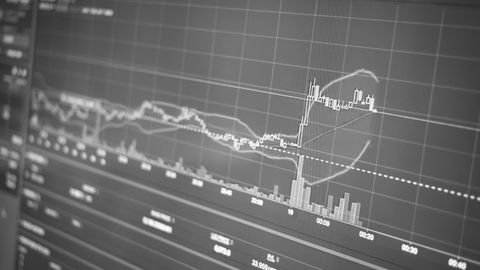
Leverage is the clearest example of an investment tool that increases expected return and simultaneously increases the probability of a catastrophic outcome.
What it does
The mechanics.
Borrowing to invest means returns are earned on a larger base while the borrowing cost is fixed.
Which magnifies gains and magnifies losses proportionally.
And which introduces a new risk that unleveraged investing does not have: the possibility of being forced to sell.
That third effect is the one that turns a temporary decline into a permanent loss, and it is what makes leverage categorically different rather than merely more of the same.
Where it appears
Frequently unrecognised.
Margin lending in brokerage accounts.
Contracts for difference and spread betting, which are heavily leveraged by design and where regulators in several jurisdictions require disclosure of the proportion of retail accounts that lose money — figures typically in the high seventies to high eighties per cent.
Leveraged exchange-traded products, which reset daily and decay over longer holding periods.
Options, which embed leverage.
Buy-to-let mortgages, which are leverage applied to property.
And, most commonly of all, a residential mortgage, which is leverage on a home and which most people do not think of as such.
The forced sale problem
The specific danger.
Leveraged positions carry maintenance requirements: if the value falls below a threshold, additional funds must be provided or the position is closed.
Which means a decline that an unleveraged investor could simply wait out becomes a realised loss for a leveraged one.
And these calls arrive during periods of market stress, when funds are least available and when selling is most damaging.
The result is that leverage converts volatility into permanent loss, which is the opposite of what a long-term investor wants.
Volatility decay
A specific feature of daily-reset products.
Leveraged exchange-traded products aim to deliver a multiple of the daily index return.
Over multiple days, the compounding of daily multiples produces a result that diverges from the multiple of the period return, and the divergence is worse the more volatile the period.
Which means an index that ends a volatile period unchanged can leave a leveraged product on it substantially down.
These are trading instruments designed for short holding periods, and holding them for months produces outcomes that surprise people who did not read the documentation.
The retail evidence
Which is stark.
Regulators requiring disclosure of retail client outcomes in leveraged derivatives have produced consistent figures: a large majority of accounts lose money.
Several jurisdictions have restricted leverage available to retail clients, banned certain products or required negative balance protection, following consumer harm.
Which is unusually direct evidence about a product category and is publicly available on every provider's website by requirement.
The mortgage case
Where leverage is normal and reasonable.
A residential mortgage is highly leveraged and is generally sensible, for reasons that illustrate when leverage works.
The asset is not marked to market daily, so a fall in value does not trigger a forced sale provided payments continue.
The term is long.
The borrowing cost is relatively low.
And the asset provides a service — accommodation — regardless of price.
Which means the danger of leverage lies substantially in the forced sale mechanism rather than in borrowing itself.
Borrowing to invest generally
The considerations.
The borrowing cost must be exceeded by the return for the exercise to add anything, and the return is uncertain while the cost is certain.
The tax treatment of interest and returns matters and varies.
The psychological effect of a leveraged loss is considerably worse than an unleveraged one.
And the interaction with the rest of your finances: someone borrowing to invest while carrying other debt has effectively taken a leveraged position on their whole balance sheet.
Which is why it is generally advised against for retail investors.
The practical rules
If you engage with leverage at all.
Understand the maintenance requirements and what triggers a forced closure.
Assume a decline larger than you expect, since that is when calls arrive.
Never use leverage with money you cannot afford to lose entirely.
Never use leveraged daily-reset products as a long-term holding.
Read the required risk disclosures, particularly the proportion of retail accounts losing money.
And recognise that the marketing of these products emphasises the magnified gains and is legally required to disclose the outcomes, which is a useful contrast.
General information only, not investment advice. Leveraged products carry a high risk of losing money rapidly. Consult a regulated financial adviser.
Also by Clara Mensah
- Knowing when to do nothingBehaviour
- Automating your investingBehaviour
- Preparing a portfolio for someone elseRisk & Volatility
- Making decisions with a partnerBehaviour