Behaviour
Herding, bubbles and manias
The pattern repeats with different assets, and recognising it in progress is considerably harder than recognising it afterwards.
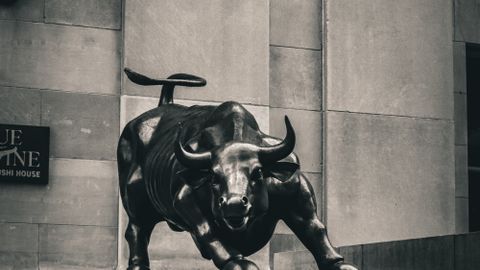
Speculative episodes have recurred across centuries and asset classes with a consistency that suggests something structural rather than accidental.
The recurring pattern
Described in various frameworks.
A genuine innovation or change creates a plausible case for higher valuations.
Early participants profit, which attracts attention.
Credit and leverage expand, amplifying the movement.
Wider participation follows, including people with no prior interest in the asset.
Valuation is abandoned in favour of narrative, and scepticism is dismissed as failing to understand.
Then something triggers a reversal, leverage unwinds, and the decline is faster than the rise.
The specific asset varies — tulips, railways, radio, technology shares, housing, cryptocurrency — and the sequence does not.
The role of a genuine story
Which makes bubbles hard to identify.
Most speculative episodes are built on a real development: the technology usually is transformative, the change usually does matter.
Railways, electricity and the internet all changed the world and all produced episodes in which prices exceeded any plausible valuation.
Which means the presence of a compelling story is not evidence against a bubble, and dismissing an asset because prices have risen is not analysis either.
The difficulty is that the story being true does not determine the price at which it is worth participating.
The behavioural mechanisms
Why people participate.
Social proof: others making money is powerful evidence, particularly when they are people you know.
Fear of missing out, which is regret aversion applied to gains not yet foregone.
Recency, which extrapolates recent returns into the future.
Narrative: a good story is more persuasive than a valuation.
Overconfidence about being able to exit before the reversal.
And the fact that early participants genuinely do make money, which validates the behaviour for those watching.
The leverage element
Which distinguishes serious episodes.
Credit expansion amplifies the rise and makes the decline faster and more damaging, since forced selling produces further declines.
Which is why episodes involving significant borrowing — housing, margin lending — cause more lasting damage than those confined to equity holdings.
And why regulators pay particular attention to leverage in speculative markets.
Recognising it in progress
Honestly difficult.
Signs frequently cited: valuation measures far outside historical ranges without a corresponding change in fundamentals; widespread participation by people with no previous interest; new metrics invented to justify prices when conventional ones cannot; heavy use of leverage; a proliferation of new products offering exposure; and the claim that traditional valuation does not apply.
The difficulty is that these can persist for years, and being early is indistinguishable from being wrong for a substantial period.
Which is why identifying a bubble does not produce a profitable strategy.
What not to do
Both errors.
Participating heavily on the assumption of exiting in time, which requires timing that most participants do not achieve.
Shorting, which can be right eventually and produce losses in the meantime that force closure of the position.
Abandoning a diversified portfolio to participate.
Borrowing to participate.
And, in the other direction, abandoning a sensible plan because it feels foolish while others appear to be making money quickly — which is the pressure that produces the widest participation near the peak.
What to do instead
Practical.
Hold a diversified portfolio, which will include the asset at market weight and will not be dominated by it.
Rebalance on the rule, which mechanically reduces exposure to whatever has risen most.
If participating at all, do so with a small, defined amount whose loss would not matter.
Avoid leverage entirely.
Write down the reason for any holding before buying it.
And treat the feeling of missing out as information about the environment rather than as a signal to act.
The aftermath
Which is instructive.
Following major episodes, the underlying development frequently proceeds successfully while the assets that were bid up never recover their peak.
Which means the story being right and the investment being profitable are separate questions.
Survivorship also distorts the retrospective view: the successful companies from a boom are remembered and the many failures are not, which makes participation look more rewarding than it was.
The general lesson
Worth carrying.
Diversification exists precisely because we cannot identify in advance which stories are correctly priced.
A portfolio that participates modestly in everything and is dominated by nothing does not require the judgement that these episodes demand.
And the discipline that feels most foolish during a mania — holding a boring diversified portfolio — is the one that survives it.
General information only, not investment advice. Investments can fall in value and past performance does not indicate future returns. Consult a regulated financial adviser.
Also by Clara Mensah
- Knowing when to do nothingBehaviour
- Automating your investingBehaviour
- Preparing a portfolio for someone elseRisk & Volatility
- Making decisions with a partnerBehaviour