Markets & Economy
What actually moves markets
Prices respond to surprises rather than to news, which explains why obvious information produces no reaction.
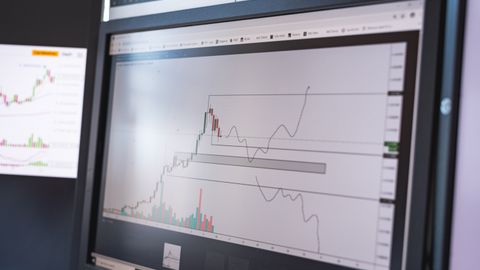
The most common confusion about markets is the assumption that good news raises prices, which is true only if the news was better than expected.
Prices reflect expectations
The central mechanism.
A market price incorporates the aggregate expectations of participants about the future.
Which means anticipated events are already reflected before they occur.
A company reporting strong profits may fall if the profits were weaker than expected.
An economy entering an anticipated recession may see markets rise, because the recession was already priced and the outlook has improved relative to expectations.
Which is why market reactions frequently appear perverse to anyone reasoning from the news rather than from the expectation.
What constitutes a surprise
The things that actually move prices.
Data materially different from consensus.
Policy decisions or communications that differ from what was priced.
Genuinely unexpected events: conflicts, disasters, failures.
Changes in the perceived probability of future events.
And shifts in risk appetite, which are harder to attribute to any specific cause.
The attribution problem
Why daily explanations are unreliable.
Markets move every day, and explanations are produced every day.
Most daily movement is not attributable to any identifiable cause, and the explanations offered are constructed after the fact.
Studies examining whether large market moves can be attributed to identifiable news have found that many cannot.
Which means reading a daily explanation is generally reading a narrative rather than an analysis.
The efficiency question
Stated proportionately.
The idea that prices reflect available information is a model rather than a description, and its strong forms are not supported.
Anomalies exist, bubbles occur, and prices can deviate from any plausible valuation for extended periods.
What is well supported is a weaker and more practical claim: publicly available information is reflected in prices quickly enough that acting on it is not profitable for a retail investor.
Which is sufficient to determine how an individual should behave, without requiring belief in perfect efficiency.
Who you are trading against
A useful frame.
Every trade has a counterparty, and in liquid markets that counterparty is frequently a professional with more information, more resources and better execution.
Which means a retail investor buying on the basis of public information is buying from someone who has decided to sell on the basis of the same information plus more.
This does not mean trading is always a mistake, and it does mean the burden is on the retail investor to explain their edge.
Long-run drivers
Which differ from short-run movement.
Over long periods, equity returns are driven by earnings growth, dividends and changes in valuation multiples.
Bond returns over the life of a holding are driven substantially by the starting yield.
Which means the starting valuation matters for long-run returns, even though it says nothing about the next year.
And it means that the things worth attending to for a long-horizon investor — valuations, yields, costs — are entirely different from the things that dominate daily coverage.
Valuation and future returns
The relationship.
Higher starting valuations have historically been associated with lower subsequent long-run returns, and vice versa, with the relationship being weak over short periods and stronger over ten years or more.
Which is useful for setting expectations and useless for timing.
Practical implication: an investor buying at high valuations should expect lower long-run returns and should plan contributions accordingly, rather than attempting to wait.
What this means practically
For an individual.
Do not act on public news, which is priced.
Do not attempt to anticipate events that others are also anticipating.
Do not interpret daily explanations as analysis.
Do attend to valuations for setting expectations rather than for timing.
Do attend to the things you control: contributions, costs, allocation, behaviour.
And recognise that the absence of an actionable edge is the normal condition rather than a failure of research.
The consolation
Worth stating.
The fact that markets are difficult to beat is precisely what makes a simple diversified low-cost approach viable.
An investor who accepts they cannot predict does not need to.
Which is a considerably more comfortable position than one requiring continuous correct judgement.
General information only, not investment advice. Investments can fall in value and past performance does not indicate future returns. Consult a regulated financial adviser.
Also by Anton Brekke
- The evidence, summarisedMarkets & Economy
- Reading the economy without a forecastMarkets & Economy
- Housing markets and what drives themMarkets & Economy
- Allocating across several accountsAsset Allocation